
Long before there was an Abram and Sarai a catastrophic worldwide flood occurred. For the sake of argument, I am going to embrace the date of the flood as approximately 2350 B.C. and accept the biblical narrative of Genesis spelling out the details of both the flood and the repopulation of the earth.
It all began with Noah’s 3 sons (Shem, Ham, and Japheth) and their wives. Sometime after the waters receded and the Ark rested on the mountains of Ararat (Genesis 8:4) Noah and his sons, along with their wives, came out of the ark and began to settle in the lands later known as the Fertile Crescent. (Genesis 8-10). The heaviest concentration of their descendants settled in the plains of Shinar which is commonly known as Babylon and where the Tower of Babel was constructed, approx. 2250 B.C. (Genesis 11:2). The Lord decided to scatter the “people” over the face of the earth and the reasons for that are described in Genesis 11:9.
Over time the various people groups (all descendants of either Shem, Ham or Japheth) settled in the regions of what we now call Syria, Egypt, Palestine and or the Middle East. Several key locations then were known as Memphis, Beersheba, Hazor, Haran, Akkad, Babylonia, and Ur. People settled in these locations because the land was fertile due to its accessibility to water as opposed to the vast desert areas that surrounded the fertile crescent. At this time and in the centuries to follow this area was called the Cradle of Civilization because it was where civilization began, and it was all the existed to known world at that time. Eventually Abram (a descendant from the line of Shem) will be born and his lineage can be traced by reading Genesis 11:10-26. But let me make that a little easier on you:
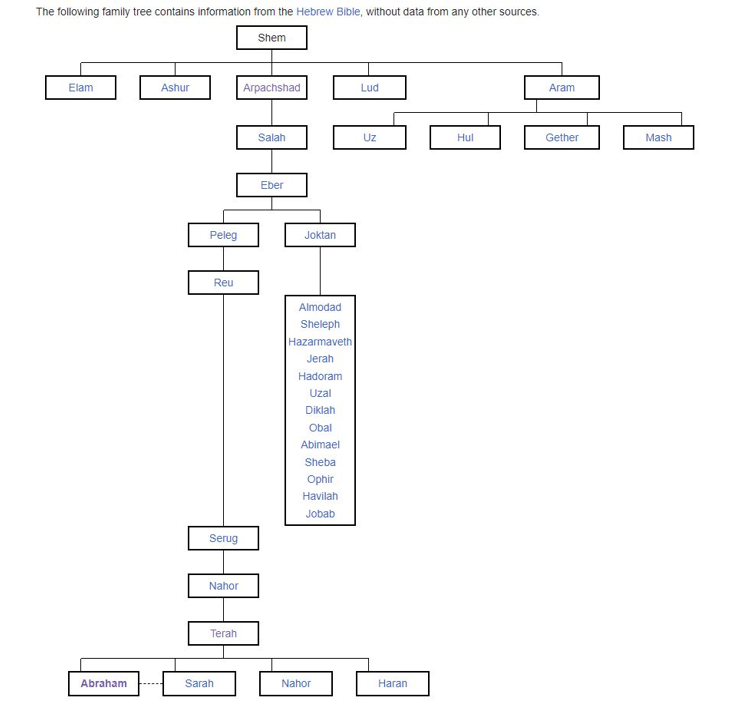
The traditional date for the birth of Abram is 2160 B.C. and from there our story begins as we learn about the call that God places on Abram (Genesis 12). It is an amazing lesson of faith and trust which is retold in the New Testament Book called Hebrews. Abram was instructed by God to leave his home which was originally located in Ur of the Chaldeans, then Harran and then told to leave there and settle in the land of Canaan. This was no easy task and not for the faint of heart as the Canaanites, Amorites and other “ites” were not going to be the best of neighbors for this new family. It was God’s plan to give this land to Abraham and his many descendants (keeping in mind that at this point Abram and Sarai had no children) which makes this faith story so powerful! (Hebrews 11:8-12) This story begins with God’s call to Abram in which he was to leave his home and settle in the Land of Promise on the belief that God would honor his promise. This act of faith which was counted as “righteousness” for Abram will generate a lasting covenant between God and Abraham in which he and his descendants will be blessed by God and given a land to settle in and worship their creator. There will be challenges and hurdles for Abram and Sarai but none of those circumstances will negate the Covenant between God and His people which we will see next week!
 Good News Bible Studies - Mike Southwick