Current Events in Israel – What might happen next

Given the current events of Israel and the Middle East and the polarizing effects of the struggle between good and evil, it is good to remind ourselves that the true enemy is Satan (a real being and not a people group) whose one goal is to destroy all that is good in our world. We must remember that sin exists, evil is real and what we are currently witnessing before our very eyes are the result of mankind’s rebellion against a Holy God. This rebellion against God will have an end because Jesus Christ provided a way of escape (by His death on the cross and His resurrection from death) for those who believe and trust in Him by faith. When He returns (as He promised He would) all things will be brought under submission to Him and He will destroy all that is evil. While we await the return of Jesus Christ our Messiah mankind will at times suffer the worst of atrocities because evil is real, and it can blind even the best intended people. We must understand that evil is the enemy of good and that God is good, and Satan is evil.

The current war that Israel is facing are the result of this evil and those who are bent on their destruction. It is possible that this war will expand beyond the borders of modern-day Israel and may well lead to a far more serious set of worldwide events that will lead to what the Bible refers to as Armageddon! That is a lesson for another day.

This study is designed to help us understand the history of Israel both from a Biblical perspective but also a historical perspective. Many (if not all) of these current conflicts can be traced back as far as Abraham and his offspring, the period of the Kings of Israel, and the times of occupation by the empires of Babylon, Persia, Greece, and Rome. Then came the Crusades, the dominance of the Ottoman Empire and the mismanagement of the Middle East ever since WWI and beyond. It is a wonder that mankind has not destroyed itself fighting these senseless battles when the answer is submission to God by simple faith in Jesus Christ. One day mankind will submit as Paul tells us in his writings to the Philippians; “For this reason also, God highly exalted Him, and bestowed on Him the name which is above every name, so that at the name of Jesus every knee will bow, of those who are in heaven and on earth and under the earth, and that every tongue will confess that Jesus Christ is Lord to the glory of God the Father” (Philippians 2:9-11)

First Family of Faith – The Story of Abraham and Sarah Part 1

Long before there was an Abram and Sarai a catastrophic worldwide flood occurred. For the sake of argument, I am going to embrace the date of the flood as approximately 2350 B.C. and accept the biblical narrative of Genesis spelling out the details of both the flood and the repopulation of the earth.

It all began with Noah’s 3 sons (Shem, Ham, and Japheth) and their wives. Sometime after the waters receded and the Ark rested on the mountains of Ararat (Genesis 8:4) Noah and his sons, along with their wives, came out of the ark and began to settle in the lands later known as the Fertile Crescent. (Genesis 8-10). The heaviest concentration of their descendants settled in the plains of Shinar which is commonly known as Babylon and where the Tower of Babel was constructed, approx. 2250 B.C. (Genesis 11:2). The Lord decided to scatter the “people” over the face of the earth and the reasons for that are described in Genesis 11:9.

Over time the various people groups (all descendants of either Shem, Ham or Japheth) settled in the regions of what we now call Syria, Egypt, Palestine and or the Middle East. Several key locations then were known as Memphis, Beersheba, Hazor, Haran, Akkad, Babylonia, and Ur. People settled in these locations because the land was fertile due to its accessibility to water as opposed to the vast desert areas that surrounded the fertile crescent. At this time and in the centuries to follow this area was called the Cradle of Civilization because it was where civilization began, and it was all the existed to known world at that time. Eventually Abram (a descendant from the line of Shem) will be born and his lineage can be traced by reading Genesis 11:10-26. But let me make that a little easier on you:

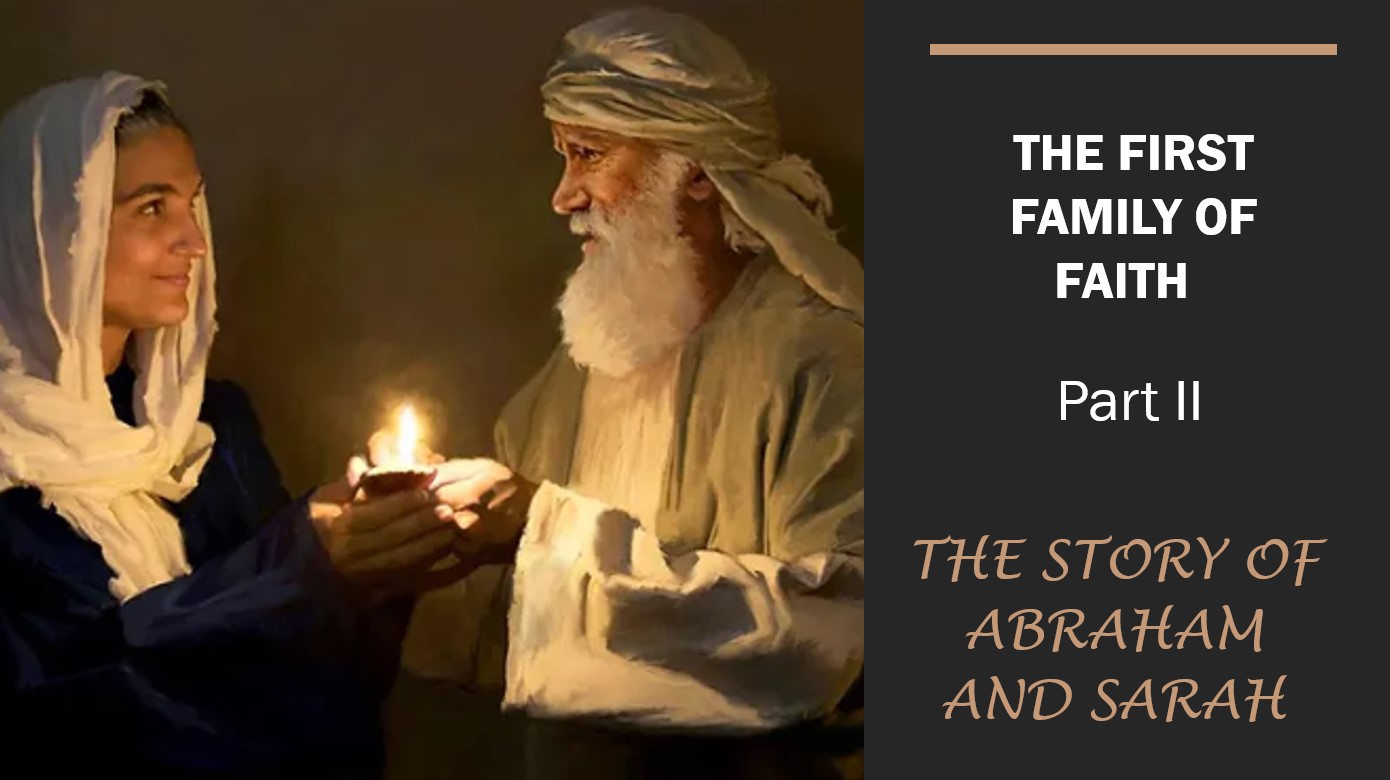
The traditional date for the birth of Abram is 2160 B.C. and from there our story begins as we learn about the call that God places on Abram (Genesis 12). It is an amazing lesson of faith and trust which is retold in the New Testament Book called Hebrews. Abram was instructed by God to leave his home which was originally located in Ur of the Chaldeans, then Harran and then told to leave there and settle in the land of Canaan. This was no easy task and not for the faint of heart as the Canaanites, Amorites and other “ites” were not going to be the best of neighbors for this new family. It was God’s plan to give this land to Abraham and his many descendants (keeping in mind that at this point Abram and Sarai had no children) which makes this faith story so powerful! (Hebrews 11:8-12) This story begins with God’s call to Abram in which he was to leave his home and settle in the Land of Promise on the belief that God would honor his promise. This act of faith which was counted as “righteousness” for Abram will generate a lasting covenant between God and Abraham in which he and his descendants will be blessed by God and given a land to settle in and worship their creator. There will be challenges and hurdles for Abram and Sarai but none of those circumstances will negate the Covenant between God and His people which we will see next week!

Great Grand Parents to a King Part 4 – A Testimony of God’s Provision and Providence

This is the fourth and final installment of our series entitled; Great Grandparents to a King – The Story of Ruth and Boaz. By way of review of the first 3 chapters of Ruth we learned:

  1. Ruth was a testimony of God’s grace (she received something she didn’t deserve) and God’s mercy (she didn’t receive something she did deserve – eternal separation from God). That same grace and mercy is extended to not just Ruth but to all of us through the death and resurrection of Jesus Christ.
  2. Ruth was a testimony of hope and we learn from this story that God provides hope for the hurting and this was evidenced in how God restores Naomi (Ruth’s mother in law) by bringing healing and blessing through the life of Ruth and Boaz.
  3. Ruth was a testimony of God’s protection which is evidenced through His plan (The birth of Jesus the Messiah), purpose (to restore and reconcile us to God through the death and resurrection of Jesus the Messiah) and pledge of redemption (the indwelling of the Holy Spirit while we wait for the return of Jesus).

There are two things we will see as we conclude this series:

  1.  The Evidence of God’s Provision which is seen through the satisfaction of the law and an act of love (Ruth 4). Both of these are never clearer when we compare the story of Ruth and Boaz to what Christ accomplished on the cross for all. Jesus Christ satisfied the righteous requirements of the law through his act of love by willingly dying on the cross to redeem us from a life of separation from God. The result is witnessed through a New Life! For Ruth the evidence of a new life is seen through her great grandson (King David) through whose linage would come the birth of the Messiah and Savior, Jesus Christ! For us the evidence of a new life happens when we accept/embrace that truth by accepting Jesus Christ (by faith) as our Lord and Savior.
  2. The Evidence of God’s Providence witnessed through the life of Naomi (sometimes bad things can happen to good people), Ruth (someone without hope) and Boaz (someone who knew what was right and did it). All 3 of these people were counted worthy to not only have their story told but to be counted in the human lineage of Jesus Christ the Messiah.

I hope you have enjoyed this series as much as I have!

Great Grandparents to a King Part 3 – A Testimony of God’s Protection

The story of Ruth and Boaz continues, and it becomes very clear that Boaz is not only attracted to Ruth, but he has every intent on “redeeming” her through the bonds of marriage. Perhaps some people (in today’s world) might struggle with this whole idea of a man (in this case Boaz who was an influential, wealthy leader of his community) needing to “redeem” Ruth as if she was some sort of property to purchase. If you draw those conclusions, then you are going to miss the whole point of the story and the whole reason this Book of the Bible is included in the Old Testament cannon of Scripture.

In the whole economy of God’s plan was for His people to care for others as He cares for us. Remember, this story of Ruth and Boaz come after the established Law that God gave to the Israelites through Moses. It is in that Law (more than just the ten commandments) that taught God’s people (the Israelites) how they were to engage with and worship their God (Jehovah), as well as how they were to treat one another and those outside of the “commonwealth” of Israel. There were rules and strict rules at that requiring the Israelites to provide for and protect those who couldn’t provide for and protect themselves. As such the fatherless, widows and orphans needed to be cared for by those who had the ability to provide that provision and protection.

“You shall not pervert the justice due to the sojourner or to the fatherless, or take a widow’s garment in pledge, but you shall remember that you were a slave in Egypt and the Lord your God redeemed you from there; therefore, I command you to do this. “When you reap your harvest in your field and forget a sheaf in the field, you shall not go back to get it. It shall be for the sojourner, the fatherless, and the widow, that the Lord your God may bless you in all the work of your hands. When you beat your olive trees, you shall not go over them again. It shall be for the sojourner, the fatherless, and the widow. When you gather the grapes of your vineyard, you shall not strip it afterward. It shall be for the sojourner, the fatherless, and the widow.” Deuteronomy 24:17-21

Ruth, by virtue of her marriage to Mahlon (son of Elimelech) was now a widow and the responsibility to care for her fell on the family of Elimelech to provide. Naomi understood this and so did Boaz. God will orchestrate a series of situations that will bring about the union of these two love birds – Ruth and Boaz.

Caring of others, especially the less fortunate is a principal found throughout the Scripture and an attribute that God has displayed throughout the Old and New Testament. This story of redemption is not a story about purchasing property or “lording over another human being by virtue of status”, but a story of Protection evidenced by the Plan of Redemption, the Purpose of Redemption, and the Pledge of Redemption. The decision by Boaz to step up and provide that “Protection” to Ruth is where we find ourselves in this third installment of our series, “Great Grandparents to a King – The Story of Ruth and Boaz”.

Great Grandparents to a King Part 2 – A Testimony of Hope

This week’s lesson begins with Naomi and Ruth leaving the land of Moab and returning to Bethlehem. You can see by what the author writes that Naomi is worn out physically, mentally and spiritually and upon her arrival in Bethlehem she even declares; “call me Mara (which means bitter) for the Almighty has dealt very bitter with me”. It was definitely time for a fresh start for Naomi and she couldn’t have picked a better time to return to her roots.

It was harvesting time in Bethlehem and Naomi’s act of obedience to return there would eventually bring full restoration and healing, but it will come in a more indirect wat through her daughter in law, Ruth at just the right time and in just the right way.

We will be introduced to a new character in our story and his name is Boaz, a kinsman (near relative) of Naomi’s husband Elimelech. As the story unfolds, we will see two hearts (that of Ruth and Boaz) blended together just as God intends a relationship to be between a man and a woman. Through a series of events, through the providence of Almighty God, Ruth and Boaz will meet and fall in love! Eventually they will marry but a few details remain to be ironed out before that happens. We will learn the significance of who Boaz is, where he came from and how he fits into this story of this Moabite woman named Ruth. Sometimes referred to as a “Type of Christ”, Boaz will redeem Ruth and become her protector and provider showing nothing but love to someone who may never have known love otherwise. Ruth and Boaz will become the Great Grandparents of King David – the one who rules over a Kingdom that has no end!

Great Grandparents to a King Part 1 – A Testimony of God’s Grace and Mercy

Welcome to the Biblical story of Ruth and Boaz – the Great Grandparents to King David through whom the human lineage of Jesus Christ the Messiah can be traced. This story of Ruth and Boaz is as much a love story as it is a story of God’s grace and mercy, redemption, providence and protection all rolled up in a little book of the Bible with the title of Ruth.

The assumed author is the Prophet/Priest Samuel and the period in which the story takes place is during the Biblical narrative of the Time of the Judges. Long after the conquest of the land of Canaan by Joshua and the twelve tribes of Israel, the people who were then known as the Israelites (commonly referred today as the Jews) were not fully obedient to God’s instructions. Although the Israelites settled in the land of Canaan (often referred to as the Promised Land), they never fully conquered the people of that land who worshipped false gods, practiced pagan rituals and lived outside of God’s blessings. This resulted in continual warfare between the 12 tribes of Israel and the non-Israelite tribes and people groups, such as the Moabites, Ammonites, Canaanites, Amalekites, Philistines and others.

The events found in the Book of Ruth probably takes place toward the end of the period of the Judges (perhaps during the time of Gideon) in which the people of God (The Israelites) were known for this statement; “In those days there was no king in Israel; everyone did what was right in his own eyes” (Judges 21:25). The events of the Book of Ruth precede the events recorded in the Book of I&II Samuel in which the people of Israel eventually secure their first King (Saul) and the King that succeeded him was David. This first lesson introduces two of our main characters – Naomi and Ruth. Through a series of tragic events, Naomi will find herself in the foreign land of Moab and she will lose her husband. Two of Naomi’s sons will each marry a Moabite woman and subsequently both of Naomi’s sons will die. This will leave Naomi in a foreign land, among people who worshipped multiple gods and not the God (Jehovah) that Naomi worshipped. Naomi will decide to leave Moab and return to the land of promise and this decision will be life changing for her and her two daughters in laws. Ruth will follow Naomi and her God while Orpah (the other daughter in law) will stay behind in Moab. This first chapter of Ruth will show evidence of God’s mercy and grace to two people who will find redemption, restoration and hope all because they chose to obey God.

The Church Grows Up – Part 4

Those who set out to reform the Roman Catholic Church as well as the Anglican Church (The Church of England) spawned a later movement that is often referred to as “The Great Awakening” or “The Great Revival”. This period in history (17th through the 21st century) will see the church grow immensely and the gospel message (The Good News) will spread to large unreached regions that will witness the transformation of lives from small tribes to large ethnic groups who (prior to this time) never heard the gospel message or the read the Scriptures in their own native tongue.

New movements and new Christian organizations will develop and “be the church” to a world who are in desperate need to hear the Good News that Jesus Saves! There will be Gospel Crusades, Revival meetings (large and small) and other venues that will witness masses of people crying out to God and submitting to Jesus as their Lord and Savior. In addition, organizations (often sponsored/supported by the church) will reach out and help to feed the hungry, provide medical aid and relief to those in need.

There was no longer just “one voice”, one council, or even one denomination that spoke for believers. The local church often led by a Pastor/Shepherd who themselves felt led or called by God through the leading of the Holy Spirit will lead/guide their local congregation.

While many Christian denominations, Christian leaders and other Christian groups find disagreement on many things – the one thing we must agree on is that Jesus is the only way to the Father – “And there is salvation in no one else; for there is no other name under heaven that has been given among men by which we must be saved” (Acts 4:12)

In the same way that these evangelists, preachers, reformers, theologians, pastors, teachers, apologists, and apostles boldly proclaimed the Good News of the Gospel – we too must carry the torch of faith until the Lord Jesus returns as he promised. The message of the Gospel (The Good New) remains at the core of what the church believes, and the church continues to declare that message until Jesus returns. “Behold He is coming with the clouds, and every eye will see Him, even those who pierced Him; and all the tribes will mourn over Him. So, it is to be Amen. I am the Alpha and Omega, says the Lord God, who is and who was and who is to come, the Almighty” (Revelation 1:7-8)

The Church Grows Up – Part 3

The Church Grows Up – Part 3 of a 4-part series.

As the Roman Empire began to lose their grip on the world and new countries and other new empires began to form, and along with that new religious and political leaders rose to power. By the time of the next Millennium, the church began to look different. The Great Schism of 1054, brough about a division between the Western Church (headquartered in Rome) and the Eastern Church (headquartered in Constantinople). In addition to those “Orthodox” systems of worship, other groups emerged that chose not to follow those systems and “dissented” or rejected certain doctrines they felt were contrary to the Apostles teachings.

These changes, along with the cry for political, religious, and social freedom (brought on by the Magna Carta and other writings), the invention of the printing press, the translation of the Scriptures into Latin and eventually into English will shed light on the compromise and corruption within the Church at large that had been going on for centuries.

The church which remained as small as 2 or 3 believers gathered together and as large as the Roman Catholic Church looked different than it did during the times of the Apostles – but the message of the gospel remained the same. What will come as a result of the Reformation are new “denominations” such as Lutherans, Presbyterians, and Anglicans which developed out of “Protest”, and they became identified as Protestants making them “different” in practice and doctrine than the Roman Catholic Church. Other “Orthodox” churches such as Greek Orthodox, Coptic (Egyptian Orthodox), Eastern Orthodox etc. will also identify separately from the Roman Catholic Church of the West. There will also be other “dissenting” groups who didn’t identify with the Roman Catholic Church, Protestantism, or other mainline Orthodox “religions” and pursued “religious freedom” following only the teachings of Jesus, the Apostles, and the written Word of God. These “dissenting” groups, along with the “Protestant” churches will emerge in the Post Reformation Period (1700’s to the present) and will lay the groundwork for a period of “Revival” that will see church continue in the fulfillment of the Great Commission until Jesus returns!

For this lesson we will focus on 5 key Reformers of the Reformation Period who recognized the compromise and even corruption that took a foothold in the Church during the Dark Ages. We should be thankful that these reformers boldly spoke the truth, even at risk of losing everything including their life. These reforms and the work of the Holy Spirit in the lives of believers continued to see the church prevail for another 1000 years and more!

The Church Grows Up – Part 2

The Church Grows Up

Part 2 of a 4-part series

As the church enters the 4th Century several key historical events take place:

  1. The Edict of Milan (AD 313) was a proclamation that declared Christianity legal in the Roman Empire and slowed the murderous persecutions against Christians.
  2. This opened the door for “religious tolerance” of Christianity in the Roman Empire and paved the way for a blending of power between the sacred (religious influence) and the secular (political influence). The result was corruption and compromise which unfortunately also infiltrated the church, which will bring on the need for reform (that will be the topic of our next lesson).
  3. Due to the continual battle against heretical teachings (primarily Arianism), many key church leaders (I call them Champions of Truth) in the church began meeting in large gatherings called “councils” in which they debated the essential doctrines of the Christian faith that remain the “orthodox” position of Christianity to this day.
  4. The results of these “councils” were the formation of “creeds” or doctrinal positions that were taught and passed on by the Apostles and early first century church leaders – which were the same teaching that Jesus Christ taught them.
  5. Since the heretical teachings of Arius attacked the very Nature of Christ and attempted to lessen the Deity of Christ; these councils made it clear that their position was that Jesus Christ was not a created being, that He is God in human flesh.
  6. Another key doctrine that was decided upon by those at the Council of Nicaea was the Trinity. They affirmed the truth that God the Father, God the Son and God the Holy Spirit were One and they were co-equal and co-eternal.
  7. Another key event that took place was the decision to accept the 27 Books of the New Testament as the whole/entirety of the New Testament canon. This occurred at the Council of Carthage in AD 397.

While all of these historical events are taking place, the great commission (spreading the Good News of Jesus Christ) remained the mission of the church. Several key leaders in the church saw to it that the message of the gospel remained the main purpose of the church without compromise. Others used the newfound power (political and religious) to seek their own personal gain through compromise and corrupt practices. The unfortunate result of this compromise will bring about persecution by the “church” against those who sought to expose their corruption. This will lead to the need for reform and change and God will direct those future “Champions of Truth” through Reformation and Revival to ensure that His Church will continue, and the “Gates of Hell” will be unable to prevail against it. Stay tuned for those next two lessons….