Part 3 – Why the Church 3.2

When we use the word “church” we need to continually remind ourselves that it is an organism and not an organization even though in modern context the perception of the church is a building, a denomination, or a ruling/authoritative body. In its purest earliest definition, the church is “the called ones” or perhaps; “a called-out assembly of believers”. This is how the church began and as time progressed; the church at Jerusalem expanded to include the church or churches of Antioch (where believers were first called Christians – “little Christs”), the churches of Asia, the churches of Macedonia, the churches of Rome and so on. The need for organization became obvious and evident, especially as the church faced persecution and heretical teaching from non-believers posing as believers.

Jesus made this declaration to His 12 Apostles; “All authority in heaven and on earth has been given to me. Therefore, go and make disciples of all nations, baptizing them in the name of the Father and of the Son and of the Holy Spirit, and teaching them to obey everything I have commanded you. And surely I am with you always, to the very end of the age” (Matthew 28:18-20). In those days after the resurrection of Jesus, this was the precisely what the Apostles and other followers of The Way did even if it meant persecution to the point of death.

No one caused a greater stir or imposed such an immense fear among the followers of The Way than a man named Saul of Tarsus. His initial mission, fully sanctioned by the Sanhedrin and Jewish leaders, was to gather up these followers of Jesus and bring them to Jerusalem to be stoned for their perceived blasphemy. Saul willingly participated in this persecution and while on his mission of destruction he met Jesus on the road to Damascus and submitted to and surrendered his life to his Savior and Lord Jesus Christ. Read the story (Acts 9) – it is very compelling, and I don’t know how anyone could walk away after reading it without coming to the same conclusions that Saul did.

From there, everything changed for Saul who was better known in history by the name of Paul. Shortly after he met Jesus on the road to Damascus, he spent some one-on-one time with his Savior and from there began a life of missionary service unmatched by anyone since. I won’t kid you; it took a little convincing to the other Apostles and followers of Jesus that Paul was now one of them but in short order Paul jumped right in and continued to obey the Lord’s command to proclaim the good news of Jesus death, burial and resurrection to the Jew first and then to the Gentiles.

This lesson; Why the Church – Part 2 is the story of the Apostle Paul and his 3 Missionary Journey’s and all that was accomplished in his life until he was martyred by Emperor Nero in 67 AD. He wrote half the books of the New Testament, 13 in all and in addition to preaching the gospel message (the death, burial, and resurrection of Jesus), he (along with Jesus and the other Apostles) provided all the teachings we need on how to live a Christ like life. We owe a great debt to this man Paul – but if he were alive today he in his normal humble manner would take no credit but lay all praise to His Savior Jesus Christ. I hope you enjoy this lesson – Why the Chruch Part 2.
Part 3 – Why The Church 3.1

Both the Gospels of Mattew and Luke provide a small glimpse (recorded in the first 3 chapters) into the birth and early years of the Life of Jesus and subsequently write about the miracles and teachings of Jesus until his death and resurrection takes place. The other 2 Gospel accounts of Mark (probably dictated by Peter) and John almost immediately begin with the public ministry of Jesus, and they also continue their writings up until the death and resurrection of Jesus.

I mention this to show that the majority of the Gospel accounts are written to lay the foundation that Jesus is the Son of God and by His authority the church was established. Jesus called twelve ordinary men from different backgrounds, occupations, and religious upbringings and began to teach them The Way. It was the Apostle John who wrote; “That which was from the beginning, which we have heard, which we have seen with our eyes, which we have looked at and our hands have touched—this we proclaim concerning the Word of life. The life appeared; we have seen it and testify to it, and we proclaim to you the eternal life, which was with the Father and has appeared to us. We proclaim to you what we have seen and heard, so that you also may have fellowship with us. And our fellowship is with the Father and with his Son, Jesus Christ.” (I John 1:1-3)

In a teaching moment; Jesus asked his disciples, Who do the people say the Son of Man is? He received several different replies; some say John the Baptist, others say Elijah, others say Jeremiah or one of the prophets. Then Jesus asked the disciples; “But what about you?” he asked. “Who do you say I am? Simon Peter answered, “You are the Messiah, the Son of the living God.” Jesus replied, “Blessed are you, Simon son of Jonah, for this was not revealed to you by flesh and blood, but by my Father in heaven. And I tell you that you are Peter, and on this rock I will build my church, and the gates of Hades will not overcome it.

This (Matthew 16:18) was the first mention of the word church and its basic meaning is the “called ones” which best defines what Jesus declared to Peter. The church in its purest sense is an organism and not an organization or a building. Over time, and even in the early days of the church as recorded in Acts, the need for structure and organization was necessary to help the church accomplish the mission or as some call it, “The Great Commission“. (Matthew 28:18-20). However, the church is and always will be “the called ones” for wherever two or three are gathered together in His name, He is in their midst. (Matthew 18:19-20).

This Lesson: “Why the Church – Part 1” is designed to show who the head of the church is which is Jesus Christ, how the church started and how that authority which was passed to the 12 Apostles to start the “Beginning of an Unfinished Work” made its splash on the world and continues until Jesus returns. (Acts 1:8)

Part 2 – Why The Resurrection

When Jesus was betrayed by Judas Iscariot and subsequently arrested by representatives of the chief priests and elders, He voluntarily submitted to be taken to trial before the Sanhedrin (The governing body of Jewish Temple). Jesus did this as it was a fulfillment of what the Old Testament prophets spoke of (read – Isaiah 53). This was all a part of God’s plan. The initial accusations and charges didn’t rise to the level of requiring death, but when the high priest asked Jesus; “are you the Messiah, the Son of God? It was His response that provides the answer to Why the Resurrection? “You have said so, Jesus replied. But I say to all of you: From now on you will see the Son of Man sitting at the right hand of the Mighty One and coming on the clouds of heaven” (Matthew 26:64). To the Jewish leaders who heard this response by Jesus considered it blasphemy, for to them Jesus was declaring himself to be equal with God. However, their method of punishment for such a claim was to be stoned to death. This was not the plan of God but instead Jesus would be presented before a Roman governor named Pontius Pilate who ultimately would pronounce judgement to crucify Him. As such, hundreds, if not thousands would witness the horrendous punishment inflicted by the Roman soldiers upon Jesus (a fulfillment of what the prophets foretold) and ultimately nailed Him to the cross because God willed it so. At any point, Jesus could have called the entire host of angels to stop such a cruel punishment, but He voluntarily submitted Himself to die for the sins of the world. Jesus was nailed to the cross and there were sufficient witnesses to that fact – four gospel accounts, 26 New Testament books, hundreds and probably thousands who witnessed the crucifixion and death.

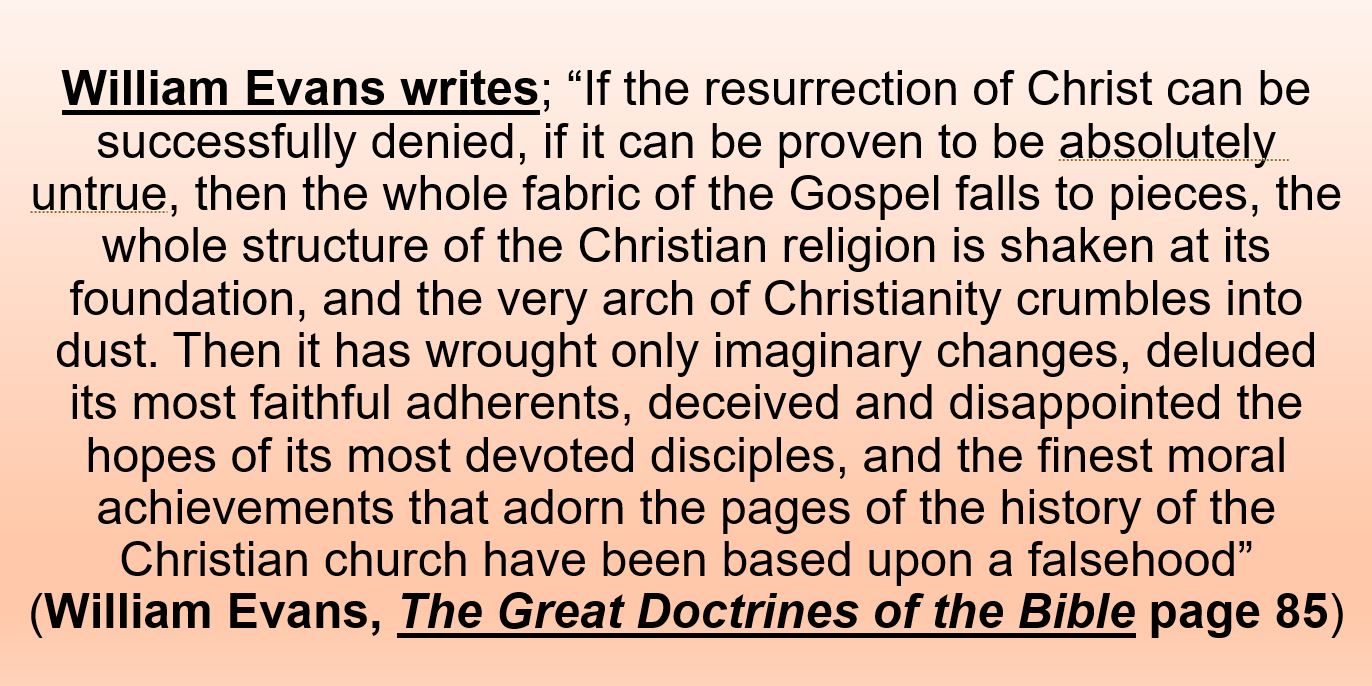
After His death, Jesus was placed in a tomb. The religious leaders went to great extremes to ensure His body stayed there and even had a stone rolled in front of the opening of the tomb to ensure his body could not be stolen. Well, 3 days later Jesus rose from the dead, because He is God and to fulfill what He told His disciples He would do. Now, there have been plenty of doubters and skeptics from then until now who claim it didn’t happen. To deny the resurrection doesn’t mean it didn’t happen but the evidence that it did happen is overwhelming! You will have to read the attached lesson to see for yourself and if I didn’t cover it thorough enough – read the Bible for yourself and draw your own conclusions. Consider this:

Why the Resurrection? Because that was always God’s plan to redeem fallen man and ransom us from eternal separation from the One who created us. All He asks is that we trust and believe Him. (John 3:16-18, Romans 10:9-10)

Part 1 – Why The Cross

Simply put – because of sin (defined as complete rebellion against a perfect, righteous and holy God) our relationship with God was broken and in need of redemption. Because sin separated us from God, the only way we could be reconciled to Him was through the atoning death on the cross by the perfect sacrifice which was Jesus Christ (John 1:1-18). Jesus Christ’s death on the cross was our atonement (making us “at one” with God) and something only Jesus could do given He was God in human flesh. He was not made God – He is God.

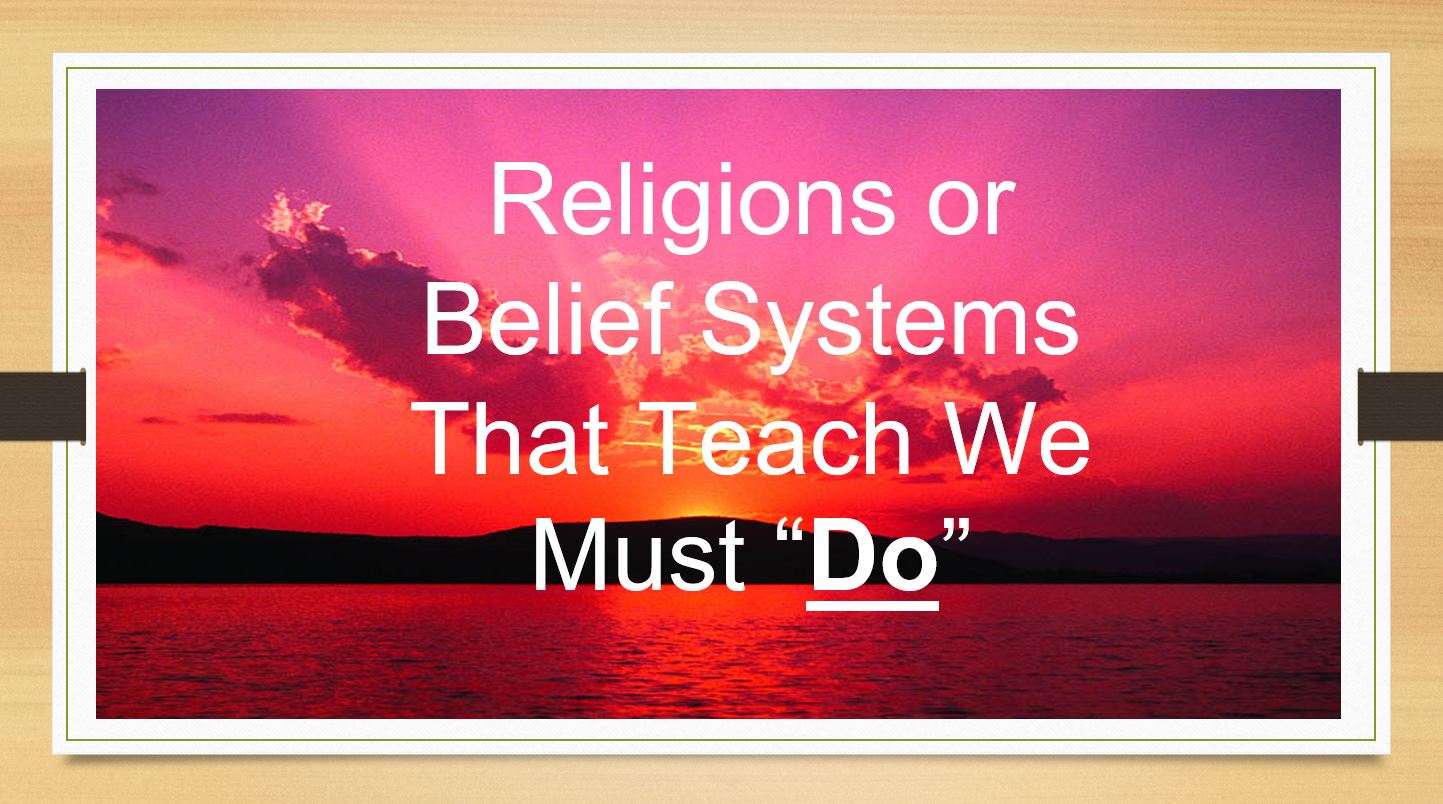
There is great disagreement, even among the other 2 monotheistic (One God) religions (Islam and Judaism) that exist in our world as to how we are reconciled to God. Like Islam and Judaism, many other “religions” fall short on answering the question of how our sins are atoned for and in some “humanistic” religions they just ignore than sin even exists. I call these religions or belief systems:

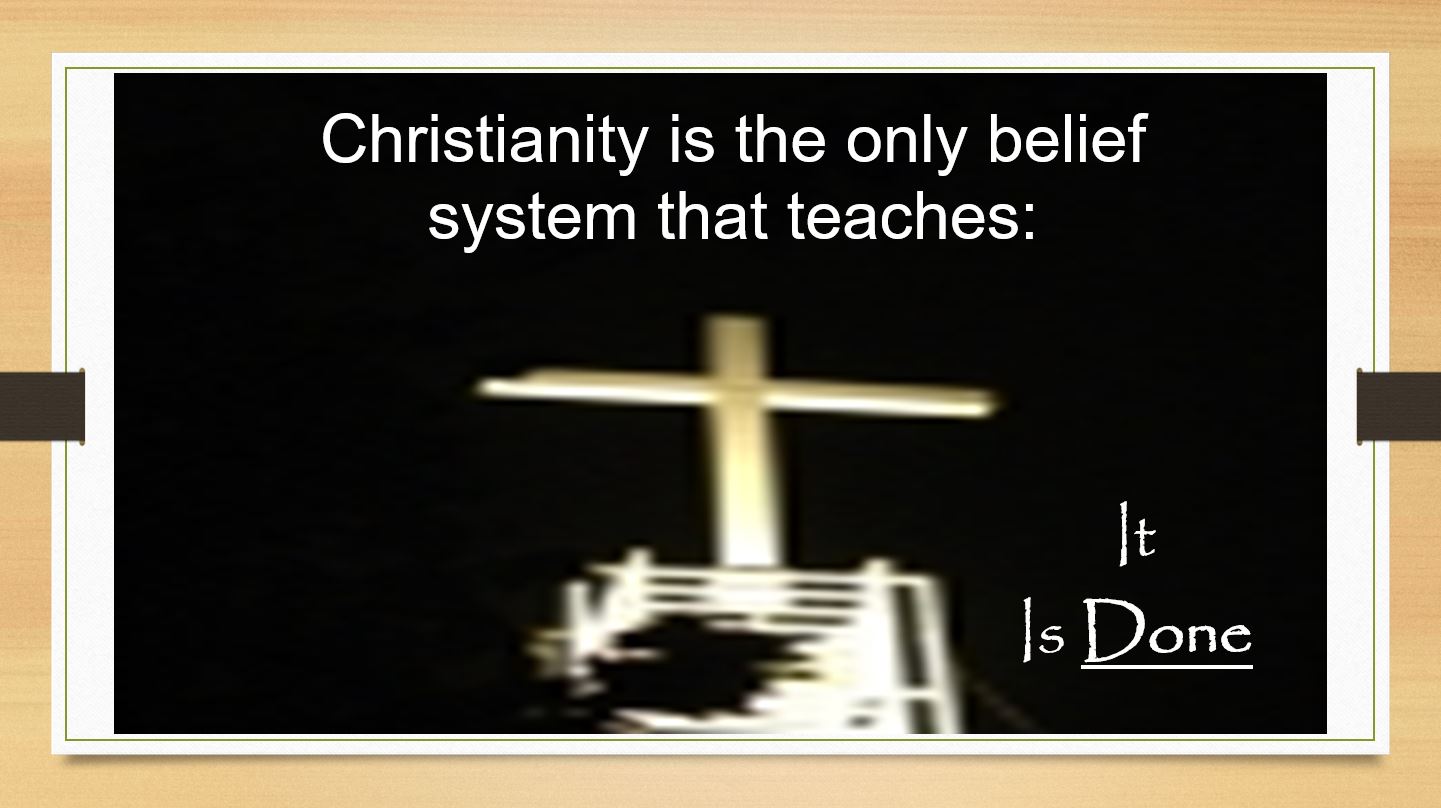
Christianity is based on faith and belief in Jesus Christ. It was His death on the cross that paid our “ransom” and delivered us from death and eternal separation from God. This is accomplished not by something we do but something that was done. “For God so loved the world that He gave His only begotten Son, that whoever believes in Him should not perish but have everlasting life. For God did not send His Son into the world to condemn the world, but that the world through Him might be saved. He who believes in Him is not condemned, but he who does not believe is condemned already, because he has not believed in the name of the only begotten Son of God” John 3:16-18. Christianity differs from all other religions and belief systems because: