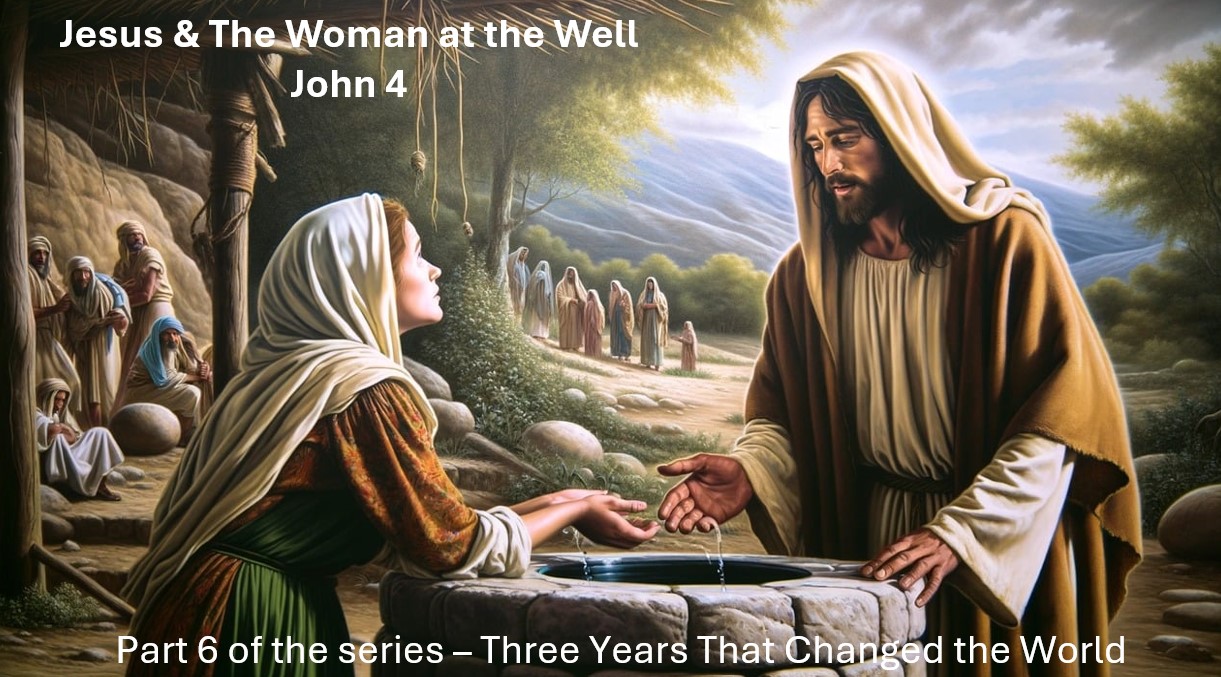

Three Years That Changed the World Part 4 – Miracles Are God’s Business

Three Years That Changed The World

Lesson 4 – Miracles Are God’s Business – John 2:1-12

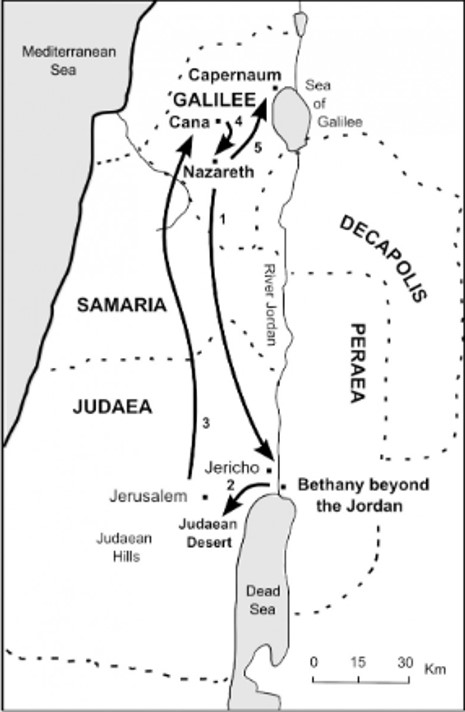
Sometime after Jesus calls Philip and Nathanael to follow him; Mary, Jesus, and his disciples will head towards the region of Galilee (more specifically Cana). They will be invited to a wedding in Cana, and this will be the scene of the very first “public” miracle by Jesus.

It is interesting that Jesus chose this moment to perform his first miracle in public and the fact that he did it at a wedding ceremony shows the value that he placed on the sacredness and importance of the marriage relationship. Jesus took something completely ordinary (water) and turned it into something extraordinary (the choicest wine). There was no magic wand, no scripted words, and no fanfare – he just made it happen, and it was so.

This miracle which is only recorded by John and not the other 3 gospel writers can be easily overlooked if we don’t take the time to carefully examine it. For starters, how about you try it! You can make wine (some can make it better than others) but it takes more than just water to make that happen. Jesus didn’t add anything to the water – he just made water become wine. We also learn from John’s record that the disciples believed the miracle and no doubt increased their faith in Jesus, but there is no record that the servants who poured the wine from the water jars who witnessed the miracle believed. This is why some people can read about this miracle and believe while others can read it and not believe.

This might have been the first miracle performed by Jesus, but it won’t be his last. In fact, John (the Apostle and gospel writer) will record 8 of the 35 miracles performed by Jesus that we find written in the New Testament. We know that Jesus performed more than 35 miracles for he will perform mass healings of people when he fed the 4000 recorded in Matthew 15; “Jesus left there and went along the Sea of Galilee. Then he went up on a mountainside and sat down. Great crowds came to him, bringing the lame, the blind, the crippled, the mute and many others, and laid them at his feet; and he healed them. The people were amazed when they saw the mute speaking, the crippled made well, the lame walking and the blind seeing”.

You have to ask yourself; why did he turn water into wine, why did he heal people of their diseases, why did he cast out demons whose sole purpose was to torment people, why did he feed masses of people with so little? Because he loves them and because he wants people to believe and follow him. He sees the pain of this world (pain not caused by Him) and wants to deliver people from the pain of their sin and the miracles he performed were for that purpose; “Jesus performed many other signs in the presence of his disciples, which are not recorded in this book. But these are written that you may believe that Jesus is the Messiah, the Son of God, and that by believing you may have life in his name” (John 20:30-31) Take a good hard look through this lesson – download the PDF and examine the scriptures for yourself. It is quite compelling to see the compassion and the power displayed by Jesus and yet some will accept him while others reject him. My prayer is that you will accept Him.

Three Years That Changed the World Part 3 – Come Follow Me

Three Years That Changed The World

Lesson 3 – Come Follow Me – John 1:38-51

This lesson picks up just after John baptized Jesus. Although John the Baptist will continue to preach and point the way to Jesus, the emphasis and focus of the Gospel writers from this point forward will be on Jesus and not John the Baptist.

In fact, two of John the Baptist’s disciples (Andrew and John) will begin following Jesus shortly after Jesus is baptized. Although they will start following Jesus, there will be several encounters between John, Andrew, Peter and James before they fully commit to Jesus and leave their occupation as fisherman of fish and become fisherman of men! This lesson will reveal their hearts and motives behind their desire and decision to follow Jesus, the Son of God, the Savior and King. It is quite a compelling story that is just beginning to unfold.

Two others (Philip and Nathanael/Bartholomew) will recognize that Jesus is the Son of God, the King of Israel and leave everything to follow him. Their story is equally compelling as Nathanael (after meeting Jesus) will come to a full understanding of what the Psalmist wrote in Psalm 139:1-4, “You have searched me, Lord, and you know me. You know when I sit and when I rise; you perceive my thoughts from afar. You discern my going out and my lying down; you are familiar with all my ways. Before a word is on my tongue you, Lord, know it completely.”

The remaining 6 disciples will begin following Jesus later but all 12 will be called to go and preach the gospel (the Good News that Jesus is the Savior) and make disciples and compel others to also follow Jesus.

This 3-year journey in which Jesus will teach them who he is, why he has come and what they are to do is written in the 4 Gospel accounts. As we read through the Gospels (specifically the Gospel of John) we will witness multiple miracles, wonders and signs along with multitudes of people who are healed of all types of diseases and infirmities.

In the end, It is my prayer and hope that you will embrace what John writes toward the end of his Gospel account, “Jesus performed many other signs in the presence of his disciples, which are not recorded in this book. But these are written that you may believe that Jesus is the Messiah, the Son of God, and that by believing you may have life in his name.” (John 20:30-31)

Three Years That Changed the World Part 2 – Two People, Two Messages, One Truth

Three Years That Changed The World

Lesson 2 – Two People, Two Messages, One Truth – John 1:19-37

This lesson begins with the introduction of John the Baptist and focuses on his ministry and purpose. That purpose was to preach repentance to the Jews and those who heard him, baptize them (a sign of an inward obedience to God), and prepare them for the coming Messiah, whom he will call “the Lamb of God, who comes to take away the sins of the world”.

There will be many who repent and do as John preached but there will be others (many of them are “religious leaders”) who will question John’s motives and authority but that will not deter John from completing his mission. That mission is to acknowledge Jesus as the Lamb of God, baptize Him and direct others to repent of their sin and follow Jesus which is precisely what he does.

The message of John and the message of Jesus were the same. John would point others to Jesus and Jesus will point them to salvation through His ultimate sacrifice on the cross.

It is because of sin that Jesus came, and sin is what separates us from God and needs to be dealt with if we ever want to spend time in His presence:

As it is written: “There is none righteous, no, not one; There is none who understands; there is none who seeks after God. They have all turned aside; They have together become unprofitable; There is none who does good, no, not one” (Romans 3:10-12)

“For the wages of sin is death, but the gift of God is eternal life in Christ Jesus our Lord” (Romans 6:23)

“But God demonstrates His own love toward us, in that while we were still sinners, Christ died for us” (Romans 5:8)

“That if you confess with your mouth the Lord Jesus and believe in your heart that God has raised Him from the dead, you will be saved. For with the heart, one believes unto righteousness, and with the mouth confession is made unto salvation” (Romans 10:9-10)

The lesson will conclude with John the Baptist transitioning his ministry and instruct those disciples who followed him to now follow Jesus. In our next lesson titled; “Come Follow Me” we will see how the 12 disciples (someday called the 12 Apostles) will leave everything to follow Jesus – stay tuned!

For Such A Time As This – The Story of Esther and Mordecai, Part V

For Such A Time As This – The Story of Esther & Mordecai

Part V – A Tale of Two Edicts

As we wrap up our study of the Book of Esther – let’s review what we have learned so far:

  1. Esther and Mordecai lived somewhere in the heart of the Persian Empire – in close proximity to Shushan (Susa) which was the winter palace of King Xerxes.
  2. Esther and Mordecai’s grandparents were part of the Jewish nobility that were originally taken into captivity by Nebuchadnezzar, King of Babylon.
  3. Once the Babylonian captivity ended (70 years) the Jews had been instructed (by Jeremiah the prophet – see Jeremiah 25 & 29) to return to Jerusalem. Many of them did when Cyrus the Great issued the decree for the Jews to return to Jerusalem to re-build their Temple. (Ezra 1:1-4)
  4. The families of Esther and Mordecai chose not to return to Jerusalem as instructed and found themselves in a foreign land outside of the blessings God had planned for them in Jerusalem. (Jeremiah 29:10-14)
  5. Through a series of events (Esther 1-2), Esther will find herself in the position of the Queen of Persia. Mordecai, initially having access to the Kings court because of Esther will overhear an assassination plot to kill King Xerxes. Although this helps the King and spares his life, Mordecai “initially” receives no credit for helping the King.
  6. At some point during the reign of Xerxes, a person by the name of Haman will rise to a significant rank within the Persian Empire and become an advisor to the King – much like a Prime Minister.
  7. Haman (because of his position) will require submission by all within the Empire but Mordecai refuses to bow down to him. Haman will discover that Mordecai is a Jew and as a result, Haman will hatch a diabolical plan to kill not just Mordecai, but all Jews within the Persian Empire.
  8. Mordecai will appeal to Esther to use her influence with the King to put a stop to this evil plan and will instruct her that she may well have been placed in the position of Queen “for such a time as this”!
  9. Esther will prepare a banquet and invites Haman and the King where she intends to let the King know she would be included in this destruction of her people as she too was a Jew.
  10. The King will have a restless night and the Lord will stir his heart to remember the assassination attempt on his life which took place some five years earlier. This will cause the King to recognize Mordecai for what he did and honor him with high honors and asks Haman to bestow those honors on Mordecai.
  11. While that is all going on, Esther will reveal to the King that Haman’s plan to kill the Jews also involved her as they were her people given, she was also a Jew.
  12. This infuriates the King and results in the King declaring Haman an “enemy of the Jews”. Haman will subsequently be impaled on the very gallows (pole) that he intended to place Mordecai on. This will result in Mordecai receiving special honor and an opportunity to save the Jews from annihilation and our final lesson explains how that takes place.

The King was bound by the original edict (Esther 3:13) to destroy, kill, and annihilate all Jews in the Persian Empire even though his Queen and New Prime Minister were Jews. That original law/edict could not be altered or revoked (because of Medo-Persian Law) or the King risked possible removal or even death.

The King will instead empower Mordecai and Esther to draft their own law and put it on the books. No doubt this was all a part of God’s plan to save the Jews from extinction. The plan that Mordecai and Esther drew up was a just law and much different from the murderous plan that Haman had put together. The new law will allow the Jews to formally defend themselves on the day that was originally planned to have all the Jews in the Empire killed. This will turn tragedy into triumph for the Jews and allow them to continue as God had planned for he was not finished with them yet.

At the conclusion of the Book of Esther we are introduced to a new feast that the Jews were to celebrate, and the name given was the Feast of Purim. Although it is not one of the required feasts of the Mosaic Law, it remains a celebrated feast within the Jewish culture even to this very day. This feast (a two-day celebration) serves as a reminder to the Jews that they were saved from annihilation (though not directly mentioned in the Book of Esther) because God protected them. This book is not just about the Lord’s protection for His people (The Jews), but it also makes it possible for the Lord to provide full redemption through the promised Messiah, Jesus a descendant of King David. “But when the fullness of time came, God sent forth His Son, born of a woman, born under the Law so that He might redeem those who are under the Law, that we might receive the adoption as sons” (Galatians 4:4-5)

For Such A Time As This – The Story of Esther and Mordecai, Part IV

For Such A Time As This – The Story of Esther & Mordecai

Part IV – A Tale of Two Choices

Everything we read about Haman reveals a wicked and diabolical man who has taken the path of evil which (as we will see) will further result in a life of pride and arrogance leading to his eventual demise. This is precisely what taking the path of evil looks like and pride is what led to the downfall of Satan and the very path (“the wide road that leads to destruction” – Matthew 7:13-14) he is attempting to cause the whole of mankind to also follow.

Mordecai and Esther have taken the path of good which (as we will see) will further result in a life of humility which will lead to their success in saving their people from extinction. Despite the evil intentions of Haman, Esther will take a bold step (being led by God) by reaching out to the King which will create an opportunity for her to plead to the king for not just her life but the lives of her people the Jews. God will use the good intentions of Esther to successfully circumvent the evil intentions of Haman.

Before this meeting with the King takes place, Haman’s pride gets the best of him, and he will have the gallows built intending to use them to put Mordecai (in full display) to death. Hatred and bitterness (a product of pride) seemed to control Haman so much that it worked against him and the gallows that he built to have Mordecai killed would be used on himself.

C.S. Lewis wrote, “The essential vice, the utmost evil, is Pride. Unchastely anger, greed, drunkenness and all that, are mere fleabites in comparison; it was through pride that the devil became the devil; Pride leads to every other vice; it is the complete anti-God state of mind…..as long as you are proud you cannot know God at all. A proud man is always looking down on things and people: and of course, as long as you are looking down, you cannot see something that is above you.”

It is only by the grace of God and his providential leading that King Xerxes has a restless night and will be stirred to examine the Persian records regarding the incident in which Mordecai previously uncovered a plot to have the King assassinated. It was Mordecai’s humility that allowed him to forgo any previous recognition but will now change not just his circumstances but also that of Haman’s. This, along with some additional findings by the King will bring judgment on Haman and blessings on Mordecai and Esther. They (Mordecai, Esther and all Jews in the Persian Kingdom) still have to face the previous edict/law requiring they be put to death – but that outcome will be found in our final lesson for next week.

For Such A Time As This – The Story of Esther and Mordecai, Part III

For Such A Time As This – The Story of Esther & Mordecai

Part III – A Tale of Two Paths

We pick up our story with Esther now serving as the Queen of the Persian Empire! We learned from last weeks lesson that this was no accident, but it was the providential hand of the Lord God. This was no mere set of coincidental circumstances that a young Jewish woman would now serve in the roll of the Queen of the mighty Persian Empire but that will show itself in the chapters that follow in the Book of Esther.

Now that Esther is Queen, her status will allow Mordecai (her cousin who probably adopted her and raised her as his own daughter) to have a watchful eye over her. This  position will allow Mordecai to overhear a plot to kill/assassinate King Xerxes and he will report that to Queen Esther who then reports that to King Xerxes and those conspirators are put to death. Unfortunately, Mordecai doesn’t receive immediate credit (he will later but that is for another lesson) and another up and comer by the name of Haman will rise to power as a key leader in the Persian government and he will have the ear of King Xerxes.

Haman (as we will discover) is an evil man and through a set of events will develop a hatred for Mordecai because he refuses to bow down to him. Haman will also find out that Mordecai is a Jew and will hatch an evil plan to kill Mordecai and all Jews throughout the empire. The Jewish heritage of Esther is yet to be revealed but in due time she will reveal her heritage to the King and both her will and her faith will be tested once the evil plot of Haman to kill and annihilate all Jews in the Persian Empire is put into place.

This lesson, titled A Tale of Two Paths, is about good and evil. Haman represents evil and all that goes along with the choice of that path. Mordecai and Esther represent good and all that goes along with choosing that path. It’s much like the lesson that Jesus taught his disciples when he said, “Enter through the narrow gate. For wide is the gate and broad is the road that leads to destruction, and many enter through it. But small is the gate and narrow the road that leads to life, and only few find it.”

Haman will choose the path of evil and will suffer the results of that decision while Esther and Mordecai will choose the path of good resulting in life for both them and their people. The lessons learned here is this study is that good will always triumph over evil and God’s providence will always prevail!

For Such A Time As This – The Story of Esther and Mordecai, Part II

For Such A Time As This – The Story of Esther & Mordecai

Part II – A Tale of Two Queens

In this lesson we find the King of the Persian Empire who is called by Ahasuerus (a transliteration of his Persian name Khshayarsha) or by his Greek name Xerxes and he is reigning over the 127 provinces of Persia which includes the land of Judah/Palestine. Xerxes was a very powerful King and the empire that he ruled over was equally powerful, so much so, it rivalled that of the Greek Empire of his time.

The first chapter of the Book of Esther introduces us to a lavish party that Xerxes put together for his military leaders and nobility to celebrate their accomplishments as an empire. The timing of this party fits into the historical record in which Xerxes was “poking the bear” and preparing to take on the Greek Empire in battle. It was common for Kings to throw lavish parties both to celebrate past victories and to prepare the military leaders for upcoming battles. Although we are not specifically told this was the purpose of the party mentioned in Esther 1 – it is certainly a strong possibility.

At this banquet we are introduced to Queen Vashti who was the reigning Queen over the Persian Empire along with Xerxes. Unfortunately for her she refuses to comply with the Kings request, and this results in her being deposed/removed as queen. This creates an interesting opportunity for the other women of the Persian Empire and as the chapter unfolds, we will see this opens the door for Esther (a young Jewish woman) to become Queen and thus replaces Vashti.

 This was no coincidence and clearly is the providential hand of The Lord God who places Esther in the right place at the right time or better defined as “Such a Time as This”. Esther will win the favor of King Xerxes and her beauty (both inside and outside) captivated Xerxes so much she was given “most favored status” even though she was a Jew. Esther’s heritage will play a roll in the events that unfold through the Book of Esther but for this moment she was the talk of the town.

In each of these opportunities we can see the providence of God at work. The way in which He orchestrates His will to be accomplished despite what may seem (to some) as unimportant at the time or a mere coincidence but, is divine intervention for His purposes and our good. The Apostle Paul writes it this way; “And we know that in all things God works for the good of those who love him, who have been called according to his purpose” (Romans 8:28)

For Such A Time As This – The Story of Esther and Mordecai, Part I

For Such A Time As This – The Story of Esther & Mordecai

Part I – Introduction/Overview

By way of introduction, there are a few interesting items to consider about the Old Testament Book of Esther. First and foremost, the book appears in the Old Testament as the 17th book of the Bible, but the historic/chronological context would place the events of Esther as one of the last 4 Books of the Old Testament.

The events of the Book of Esther take place over a period of 10 years (483 – 473 BC) during the reign of the Persian King Ahasuerus (aka Xerxes) who ruled over the 127 provinces of the Persian Empire from 485-465 BC. Prior to this time, the Jews (of the Southern Kingdom of Judah) were taken from their lands of Judah and relocated to the land of Babylon. This was known as the “Exile” and something that was prophesied to happen by Jeremiah the prophet. Eventually the Babylonian Empire was conquered by the Persians in 539 BC, and they ruled over the people of Judah until a later date when the Greeks conquer the Persian Empire.  It was Cyrus the Great (great grandfather to King Ahasuerus) who will decree that the Jews would be permitted to return to their homeland and rebuild their temple. Many Jews will return to Jerusalem as they were instructed to do, and you can read about that in the books of Ezra, Haggai, and Zechariah.

The story of Esther is about those Jews who remained behind in Persia and did not return to Jerusalem as thy were commanded to do. Esther and Mordecai’s grandparents were part of the group that remained behind in Persia and set the stage for the events recorded in the book of Esther. The story that unfolds in the Book of Esther is a powerful testimony to the sovereign protection of God as He purposes to fulfill the promises made to Abraham and his descendants. We will be introduced to two wonderful people, Esther, and Mordecai, who God will use to spare the people of promise (the Jews) from complete annihilation by an evil man named Haman. It will be Esther and Mordecai, who stand in the gap and assists their people in protecting themselves and ultimately securing the lineage of King David that would one day bring about the Messiah, Jesus Christ.