The Church in Motion (Acts 8)
Part 7 in the Series – “The Beginning of an Unfinished Work”
The persecution of the church becomes even more severe as Luke will continue to point out throughout the Book of Acts. The followers of Christ, especially the apostles and leading disciples are now in the crosshairs of the evil one who will do everything within his power to squelch and or stop it. Beginning in Acts 8, we are introduced to a man named Saul who was himself a Pharisee and became the “chief persecutor of Christians” during those early days of the church. He will later be confronted by Jesus while on his way to Damascus to slaughter more Christ followers (Acts 9) and upon seeing Jesus, he will convert and become a Christ follower. Eventually he will start using his Roman name which is Paul (Acts 13:9) and that is how he is referred to for the balance of the New Testament.
All this persecution will result in the scattering of these Christ followers throughout the regions of Judea and Samaria. It is because of this persecution and scattering that we will be introduced to several new individuals, the first of which is Philip. This is not the same Philip who Jesus called to be one of his followers/disciples (John 1:43-50) and later identified as one of the twelve apostles. The Philip mentioned here in Acts 8 is the same Philip who is references as one of the seven deacons set apart and appointed by the apostles (Acts 6) to aid in the distribution of food to the widows. Later on in the Book of Acts Philip will become known as Philip the Evangelist and that title will stick with him throughout the first century.
Philip will begin ministering through the region of Samaria where he will preach the truths about Jesus’ death and resurrection. Philip will also perform many miracles, wonders, and signs, and even cast out demons through the power of the Holy Spirit. While preaching and performing these miracles in Samaria, a magician by the name of Simon will witness these extraordinary powers and seek to know more. Now Simon (known as Simon Magus or Simon the Magician) was known for his practice in sorcery, but he seemed interested in Philip’s message to the point where we are told that Simon even believed and was baptized. However, Simon the Magician’s faith proved to be false and that false faith was later exposed by Peter as Peter declared these words; “Peter answered: “May your money perish with you, because you thought you could buy the gift of God with money! You have no part or share in this ministry, because your heart is not right before God. Repent of this wickedness and pray to the Lord in the hope that he may forgive you for having such a thought in your heart. For I see that you are full of bitterness and captive to sin.” (Acts 8:20-23)
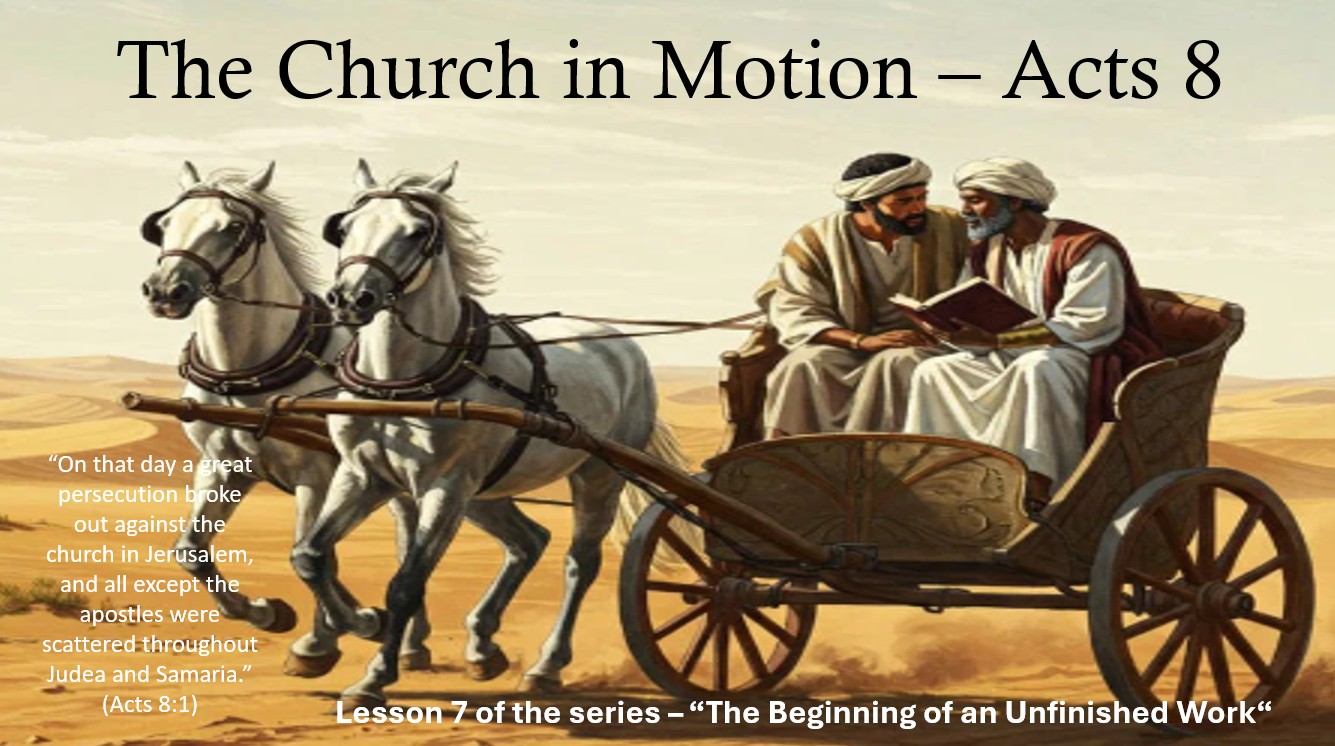
From Samaria, Philip will travel south toward Gaza where he will meet a man that Luke refers to as the Ethiopian Eunuch. When he encounters this man (we aren’t given his formal name), Philip finds him reading the scrolls (book) of Isaiah. Philip asks the man if he understood what he was reading and the Eunuch responded that he needed someone to help him understand the meaning of what Isaiah wrote. Philip sets out to explain that what Isaiah wrote some 750 years earlier was fulfilled in the life, death and resurrection of Jesus Christ. This resulted in the Ethiopian Eunuch professing Christ as Lord and the Eunuch (out of obedience to his Savior) was baptized by Philip.
Notice the contrast to the false faith of Simon the Magician and compare that to the genuine/true faith of the Ethiopian Eunuch. We have no further Biblical evidence of what happened to either of these men (Simon the Magician or the Ethiopian Eunch), but an early church leader named Irenaeus claims the Ethiopian Eunuch became a missionary to the Ethiopians. As to Philip the Evangelist; he had a fruitful and effective ministry in the entire region (cities such as Joppa and Lydda), and he is living proof that much can be accomplished (irrespective of title or accomplishment) when we obediently serve God with our whole hearts and follow His leading.