God Was Never Silent – His Story From Malachi to Matthew Part 4

God Was Never Silent

His Story from Malachi to Matthew – Part 4

During the times of the Greek Empire – Rome was becoming a major power in the Western Mediterranean. To fully rid themselves of Greek rule, the Jews (still being led by Hasmonean descendants) sought the help of the Romans by pledging a mutual alliance of protection. Rome will subjugate Palestine in 63 B.C. and dominated this territory during the entire New Testament Period. The Romans allowed Palestine to be somewhat “self-ruled” – although they controlled the appointment of who was in charge. Thus, Judea became a Roman province of Syria – approximately 60 B.C.

The Roman Empire is the 4th Kingdom in the dream that Daniel interpreted for King Nebuchadnezzar in Daniel 2 so none of this was a surprise to God and something He was clearly orchestrating. This was all to bring about the birth of the Savior of the world, Jesus the Christ, the Son of God.

Through a series of events, a Roman leader will come to power and his name was Octavian, but he is better known as Caesar Augustus. He will be instrumental in establishing a “peace through strength” form of government which was commonly referred to as Pax Romana (Roman Peace). During his reign the Roman road system will be built throughout the empire to assist in troop movement and the easy flow of commerce across the lands. All of this will provide a means for the proclamation of the gospel to spread during the New Testament period.

It will be during the time of Caesar Augustus that the Messiah will be born in a lowly town called Bethlehem. Ironically, most of the priests will be oblivious to the signs of his birth and as we will see in our next study ( “Three Years That Changed the World”), many of the priests will openly reject Jesus and call for his crucifixion.

However, God always has a remnant and there will be those who will believe that Jesus is the promised Messiah and will follow him. It all starts with the birth of John the Baptist who was the one spoken of by the prophet Malachi. John the Baptist will turn many Jewish hearts back to God through the act of repentance and baptism with the intention of directing them to follow Jesus through faith that He is the promised Messiah. Next Mary (a virgin) will give birth to Jesus, the promised Messiah and this announcement is made, not to the priests in the synagogue, but to a group of shepherds who will come to the place Jesus was born and worship Him. This lesson will close out with a group of Magi’s who follow a star to Bethlehem and find the child there and choose to worship Him. Although our series concludes with the birth of the Messiah, His story doesn’t end there. He will lead a sinless life, teach others to love God and love one another, and proclaim the good news that He is the Savior of the World! There will be those who believe in Him and those who reject him, but it doesn’t change the fact that He Is who He claimed to be. (John 1:1-14). His story continues……..

God Was Never Silent – His Story from Malachi to Matthew

God Was Never Silent

His Story from Malachi to Matthew – Part 1

We sometimes ignore the events between the “Testaments” (Old and New) depending on the “religious” and denominational influences in our lives. In doing that we really miss out on what was going on in the Palestine region (The Land of Promise) as well as those who lived there after the Jewish exile to Babylon, and the subsequent Gentile rule of the Persians, Greeks, and Romans up to the birth of the Savior of the world, Jesus Christ as recorded in the Gospels. This period, referred to as The Times of the Gentiles by Daniel the prophet, is rich with the influence and purposes of God as He prepares the world for the birth of His Son through a virgin named Mary.

It’s not that God stopped working after Malachi penned his book and then all the sudden re-engaged with the Jews and the whole of mankind during the time of Matthew. On the contrary, God guided His people (the chosen ones – descendants of Abraham) even during some of the darkest days they ever faced. It all started with the Jewish exile to Babylon because of the disobedience of their leaders (starting with Solomon) and the people’s unwillingness to make permanent changes in their behavior toward God and their fellow man.

The Exile (Babylonian captivity) lasted 70 years, just as Jeremiah the prophet said it would. The Jews (as they became known, probably a shortened version of the tribe of Judah) were instructed to return from Babylon to Jerusalem and rebuild their temple and their city which had been destroyed by Nebuchadnezzar. It was God who prompted the heart of Cyrus, King of Persia, the then ruler of the Persian Empire which (included Palestine) to allow the Jews to return and rebuild the Temple and the City of Jerusalem,

The Jews would be under the control of the Perian Empire and its rulers for approximately 2 centuries. During that time the Jews returned to Jerusalem under the leadership of Zerubbabel, Ezra and Nehemiah and would rebuild the Temple and the city of Jerusalem, although not to the grandeur of the time of David and Solomon. During the post exile period (Times of the Gentiles), God also used the influences of the prophets Haggai, Zechariah, and Malachi to influence the Jewish people and their leaders. Other prophets like Daniel and Ezekiel (who primarily prophesied during the exile) along with Isaiah provide hope for a future kingdom that they had yet to witness and participate in. This “hope” would one day become a reality, but it begins with the birth of the Messiah (Jesus Christ, The Son of God), along with His death on a cross that ushers in a Kingdom that is still at work. Although many rejected Him, Jesus established His church, and all believers await His return to establish His reign that will have no end! This first lesson is an overview of events from the time of the exile (Babylonian Captivity) up to and including the return to rebuild the Temple in Jerusalem. The lesson will highlight the works of Zerubbabel, Ezra, and the early influences of Nehemiah as they work to rebuild the Temple. This will help lay a groundwork of an understanding of the Intertestamental Period from Malachi to Matthew.

Part 1 – Why The Cross

Simply put – because of sin (defined as complete rebellion against a perfect, righteous and holy God) our relationship with God was broken and in need of redemption. Because sin separated us from God, the only way we could be reconciled to Him was through the atoning death on the cross by the perfect sacrifice which was Jesus Christ (John 1:1-18). Jesus Christ’s death on the cross was our atonement (making us “at one” with God) and something only Jesus could do given He was God in human flesh. He was not made God – He is God.

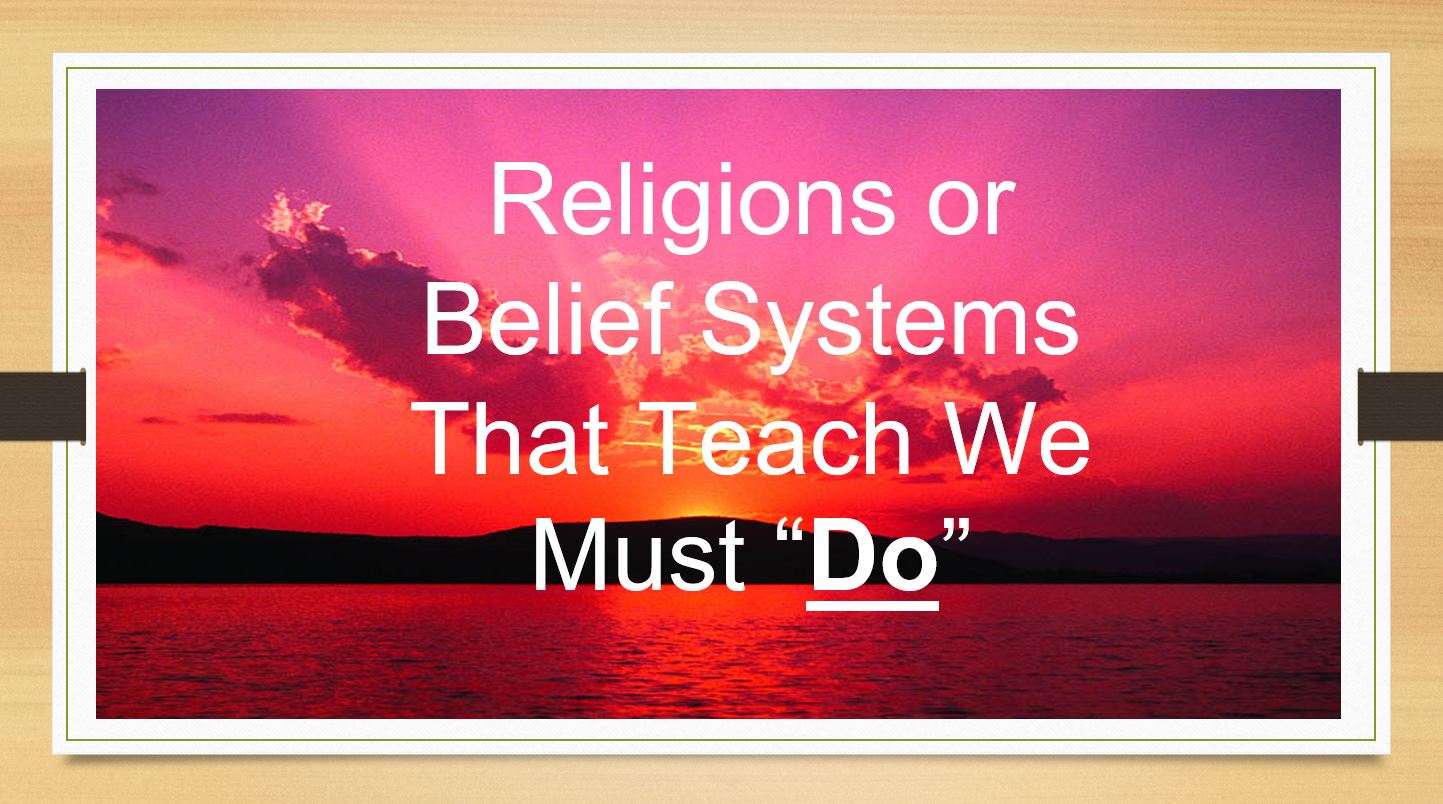
There is great disagreement, even among the other 2 monotheistic (One God) religions (Islam and Judaism) that exist in our world as to how we are reconciled to God. Like Islam and Judaism, many other “religions” fall short on answering the question of how our sins are atoned for and in some “humanistic” religions they just ignore than sin even exists. I call these religions or belief systems:

Christianity is based on faith and belief in Jesus Christ. It was His death on the cross that paid our “ransom” and delivered us from death and eternal separation from God. This is accomplished not by something we do but something that was done. “For God so loved the world that He gave His only begotten Son, that whoever believes in Him should not perish but have everlasting life. For God did not send His Son into the world to condemn the world, but that the world through Him might be saved. He who believes in Him is not condemned, but he who does not believe is condemned already, because he has not believed in the name of the only begotten Son of God” John 3:16-18. Christianity differs from all other religions and belief systems because: