
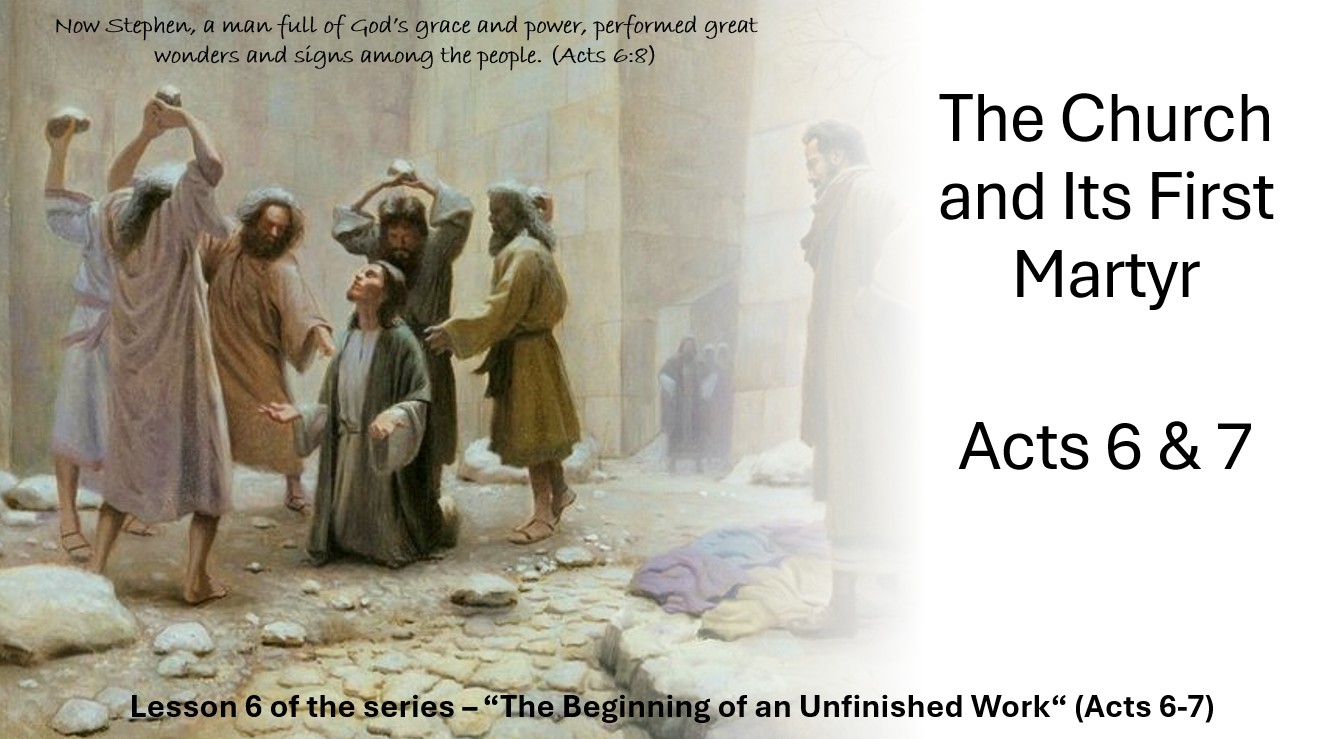
The Church and Its First Martyr (Acts 6-7)
Part 6 in the Series – “The Beginning of an Unfinished Work”
Luke begins this chapter (Acts 6) by referencing; “In those days”, which is probably best understood to be the period that encompasses the growth of the early church. The events recorded in Acts 6-7 would have occurred somewhere between 30-33 AD.
The church continued to increase in size but no specific number was given as to how many additional Christ followers were added since Acts 4:4 but the estimate exceeds 20,000 people. Due to this increase, a problem had arisen where during the daily food distribution, the widows of the Greek speaking Jews (also sometimes referred to as Hellenists) were being overlooked, while the widows of the Hebraic Jews were receiving food and care. There was an apparent need for further organization to meet a specific need of distributing food and care to the widows within the church. So, the 12 apostles gathered all the disciples together to discuss a plan of action and avoid the first church split.
The Apostles chose 7 men who were known to be full of the Holy Spirit, and they delegated to these seven chosen men the administrative task of daily distributing food and other resources to the widows in need. This allowed the Apostles to remain true to their primary calling which was to pray and preach/teach the word. One of the men chosen was Stephen who is described as a man full of faith and the Holy Spirit.
Luke tells us that; “Stephen, a man full of God’s grace and power, performed great wonders and signs among the people”, but this did not sit well with some of the members of the Synagogue of the Freedmen, and they raised up opposition to him. Stephen will debate these Jews by declaring that Jesus is the Messiah. This results in them making false claims that Stephen spoke blasphemous words against Moses and against God which will bring Stephen before the Sanhedrin to hear this case against him. These accusations were a complete fabrication and purported in this fashion because they could not defeat him in debate or withstand the wisdom and Spirit by which he spoke. Although false, these accusations were designed to provoke the Sanhedrin council, along with the people, to be against Stephen.
Stephen’s response is a rather lengthy historical account (Acts 7) of the descendants of Abraham who later became known as the Israelites. Although they are known as God’s chosen people, Stephen will also point to their rebellious nature and even their tendency to be “stiff necked” and unwilling to fully submit to God. They placed their selfish desires above God’s plans for them, which was to deliver them (through Christ) from their sin and make them “holy” and “right” before God and they chose instead to crucify Jesus.
To Stephen’s point, the temple had become a “type or form” of idol worship to the religious leaders, and they simply could not acknowledge that Jesus was the fulfillment of the law and the temple. This did not sit well with the religious leaders and sets the stage for the Sanhedrin’s full condemnation of Stephen by ordering him to be taken out of the city and stoned to death. They had no right to do this but neither did they have the right to demand the crucifixion of Christ. This is how Luke closes out Acts 7; “While they were stoning him, Stephen prayed, “Lord Jesus, receive my spirit.” Then he fell on his knees and cried out, “Lord, do not hold this sin against them.” When he had said this, he fell asleep.” (Acts 7:59-60). This is a powerful reminder of how we should act towards others, even those who may be our enemies. You may never fully know the impact of your life on someone else (whether it is a believer or an unbeliever, an enemy or friend) and it’s in these moments of crisis where our faith and belief really show the Jesus we believe in, to those around us.

