
The Church in Motion (Acts 8)

The Church in Motion (Acts 8)

Part 7 in the Series – “The Beginning of an Unfinished Work”

The persecution of the church becomes even more severe as Luke will continue to point out throughout the Book of Acts. The followers of Christ, especially the apostles and leading disciples are now in the crosshairs of the evil one who will do everything within his power to squelch and or stop it. Beginning in Acts 8, we are introduced to a man named Saul who was himself a Pharisee and became the “chief persecutor of Christians” during those early days of the church. He will later be confronted by Jesus while on his way to Damascus to slaughter more Christ followers (Acts 9) and upon seeing Jesus, he will convert and become a Christ follower. Eventually he will start using his Roman name which is Paul (Acts 13:9) and that is how he is referred to for the balance of the New Testament.

All this persecution will result in the scattering of these Christ followers throughout the regions of Judea and Samaria. It is because of this persecution and scattering that we will be introduced to several new individuals, the first of which is Philip. This is not the same Philip who Jesus called to be one of his followers/disciples (John 1:43-50) and later identified as one of the twelve apostles. The Philip mentioned here in Acts 8 is the same Philip who is references as one of the seven deacons set apart and appointed by the apostles (Acts 6) to aid in the distribution of food to the widows. Later on in the Book of Acts Philip will become known as Philip the Evangelist and that title will stick with him throughout the first century.

Philip will begin ministering through the region of Samaria where he will preach the truths about Jesus’ death and resurrection. Philip will also perform many miracles, wonders, and signs, and even cast out demons through the power of the Holy Spirit. While preaching and performing these miracles in Samaria, a magician by the name of Simon will witness these extraordinary powers and seek to know more. Now Simon (known as Simon Magus or Simon the Magician) was known for his practice in sorcery, but he seemed interested in Philip’s message to the point where we are told that Simon even believed and was baptized. However, Simon the Magician’s faith proved to be false and that false faith was later exposed by Peter as Peter declared these words; “Peter answered: “May your money perish with you, because you thought you could buy the gift of God with money! You have no part or share in this ministry, because your heart is not right before God. Repent of this wickedness and pray to the Lord in the hope that he may forgive you for having such a thought in your heart. For I see that you are full of bitterness and captive to sin.” (Acts 8:20-23)

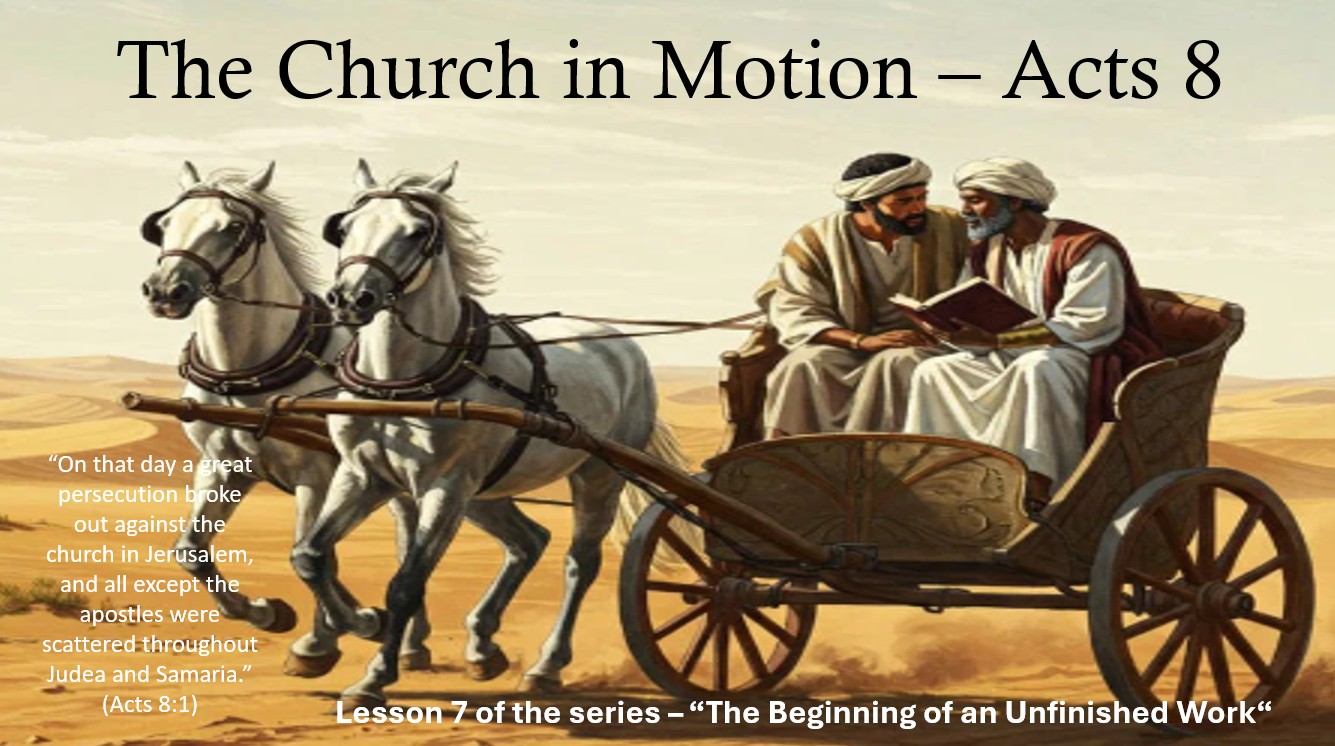
From Samaria, Philip will travel south toward Gaza where he will meet a man that Luke refers to as the Ethiopian Eunuch. When he encounters this man (we aren’t given his formal name), Philip finds him reading the scrolls (book) of Isaiah. Philip asks the man if he understood what he was reading and the Eunuch responded that he needed someone to help him understand the meaning of what Isaiah wrote. Philip sets out to explain that what Isaiah wrote some 750 years earlier was fulfilled in the life, death and resurrection of Jesus Christ. This resulted in the Ethiopian Eunuch professing Christ as Lord and the Eunuch (out of obedience to his Savior) was baptized by Philip.

Notice the contrast to the false faith of Simon the Magician and compare that to the genuine/true faith of the Ethiopian Eunuch. We have no further Biblical evidence of what happened to either of these men (Simon the Magician or the Ethiopian Eunch), but an early church leader named Irenaeus claims the Ethiopian Eunuch became a missionary to the Ethiopians. As to Philip the Evangelist; he had a fruitful and effective ministry in the entire region (cities such as Joppa and Lydda), and he is living proof that much can be accomplished (irrespective of title or accomplishment) when we obediently serve God with our whole hearts and follow His leading.
The Beginning of an Unfinished Work Part 1 – Introducing the Church (Acts 1)

The Book of Acts seems to naturally pick up where Luke left off in his Gospel account in which he lays out in detail the life and ministry of our Lord Jesus Christ. Contained in Gospel record written by Luke is a clear “historical record” that begins with the virgin birth of Jesus and continues with His 3-year ministry on earth, providing detail as to His atoning death on the cross, and records the resurrection of Jesus which is the central doctrine of Christianity! (I Corinthians 15) The Book of Acts continues in that “historical” vein in which Luke begins with the commission by Jesus for the apostles (messenger/one who is sent out) to take the gospel to Jerusalem, Judea, Samaria, an uttermost part of the earth” and records for us in detail just how that is accomplished. Although Luke’s “inspired record” ends in Acts 28 with Paul’s arrival in Rome; contained in the passages between Acts 1 through Acts 28 are an endless amount of historical record that pieces together the early days of the Church. During this study, “The Beginning of an Unfinished Work”, we will explore his historical record as we weave or way through the book of Acts along with the Epistles/Letters written by other New Testament authors.

Introducing the Church – Acts 1

Part 1 in the Series – “The Beginning of an Unfinished Work”

After the resurrection and during the 40 days that Jesus walked the earth prior to his ascension into heaven, Jesus taught about the kingdom and instructs his disciples to return to Jerusalem and await his further instructions about the coming of the Holy Spirit. After the 40 days had been completed, Jesus ascends into heaven (Acts 1:9-11) and the disciples did as they were commanded and returned to Jerusalem.

While gathered together in Jerusalem, the 11 remaining apostles (Judas had hung himself and was now dead), several women including Mary the Mother of Jesus, Jesus’ brothers (these were biological siblings from Mary and Joseph after Jesus was born) who were James (who would become the leader of the Jerusalem church), Joses, Judas/Jude (author of Jude), and Simon, along with other disciples (120 in all) began to seek the Lord through prayer while awaiting the coming of the Holy Spirit. One of the tasks of the apostles was to find a replacement for Judas who betrayed Jesus and eventually killed himself. They were looking for an individual who was a witness to the earthly ministry of Jesus and an eyewitness to the resurrection. The two men that were nominated to fill Judas’ position was Joseph called Barsabbas and Matthias. After a time of prayer and seeking the Lord’s direction, they chose Matthias. Now that Matthias has been chosen, all was ready for the birth of the Church on the Day of Pentecost as described in Acts 2.

Three Years That Changed the World – Hosanna in the Highest (Jesus in John 12)

Three Years That Changed the World – Lesson 14

Hosanna in the Highest – Blessed is He Who Comes in the Name of the Lord

(Jesus in John 12)

At the conclusion of John 11 we learned that the religious leaders were so spiritually blind that they openly rejected the one who claimed “I am the Resurrection and the Life”. They objected so vehemently that they were about to hatch a plan to have Jesus arrested, tried and put to death, hoping to forever silence him. Jesus knew that the Sanhedrin was plotting to have him arrested and ultimately killed but it wasn’t in God’s timing quite yet. There was still more for Jesus to do.

Jesus, the one who had been ministering for the past 3 and a half years performing miracles, wonders, and signs was on his way to Jerusalem (with a few brief stops) in what is commonly called the “triumphal entry” where He formally/officially presents Himself to Israel as the Messiah and Son of God. When this takes place, it will infuriate the religious leaders which will set in motion the chain of events that will quickly lead to his death at the precise time that was foreordained by God. In fact the remaining 10 chapters of the Gospel of John (John 12-21) cover approximately a 7 day period.

It might have been perceived by the crowd (perhaps they hoped) that Jesus would prove to be the promised Messiah that (they thought) would liberate them from Roman rule and domination and establish the promised kingdom (II Samuel 7:1-16). Jesus was their king, but their deliverance would come later when he is nailed to a cross for the sins of the world and raises from the dead, ascends to heaven, and awaits his final return to rule and reign as promised.

John records for us in chapter 12 of the anguish that Jesus felt knowing of his soon death on the cross where he would bear the sin of the world and the ultimate shame that would bring on him (someone who knew no sin) and for a brief moment separate him from the Father. John will close out the chapter with a rebuke by Jesus against the spiritual blindness of the Jews (those who will call for him to be crucified) who refused to believe in Him.

My prayer is (if you haven’t already done so) that you will open your eyes and see that Jesus is the Savior and Messiah and accept Jesus as Lord and Savior (“That if you confess with your mouth the Lord Jesus and believe in your heart that God has raised Him from the dead, you will be saved. For with the heart one believes unto righteousness, and with the mouth confession is made unto salvation, Romans 10:9-10) and be able to say; Hosanna in the Highest, blessed is he who comes in the name of the Lord.